
One Year Out: HRC’s Groundbreaking Playbook to Help Candidates Win in 2026 and Beyond
Winter 2026 • Sam Lau He/Him
In June 2023, the Human Rights Campaign declared a national state of emergency for LGBTQ+ Americans. We saw what was coming. We told every candidate, every campaign, every party leader who would listen: This is about to get worse, and you need to be ready to stand up.
Some listened. Too many didn't.
Now we're living in the emergency. And some of those same candidates are coming to HRC to understand how to respond when they are attacked for supporting LGBTQ+ people.
Here's what we tell them: This is not the moment to hedge. This is not the moment to focus-group your values. This is the moment to say what you believe — with your whole chest — and fight like you mean it.
That’s why, after a presidential election cycle marked by relentless anti-trans attacks and one year of a Trump-Vance administration weaponizing government against LGBTQ+ people’s health and safety, HRC unveiled a messaging playbook for pro-equality campaigns to effectively define themselves early, fight back against anti-trans attacks and go on offense with their pro-equality values.
Post-election analysis and polling from HRC and Global Strategy Group show clear trends: Battleground district voters overwhelmingly support non-discrimination and equality, are weary of politicians inserting themselves in people’s personal lives while ignoring urgent crises facing the country, and reject anti-trans fear mongering when candidates push back and define themselves.
The 2025 elections prove that pro-equality candidates can win big — if they make clear who they are and what they stand for. Three clear examples:

In Virginia, Lt. Gov. Winsome Earle-Sears’ campaign and its allies spent 57% of their paid media budget on ads echoing Trump’s bigoted rhetoric. In the face of such attacks, Gov. Abigail Spanberger did not stay silent. Her preparation and responses were swift and strong. She introduced herself and her values to voters long before the attacks came, launched her own ad to counter the message, and called out Earle-Sears directly on the debate stage. Spanberger’s strategy was successful. She won by 15 points.
In New Jersey, Gov. Mikie Sherrill argued that students should be taught our nation’s full history — including LGBTQ+ history. Her opponent, Jack Ciattarelli, hit back with attack ads. They proved ineffective. Sherrill won by 14 points.
In New York City, Mayor Zohran Mamdani spent the days just before his election rallying LGBTQ+ voters at queer bars and parties. This was strategic, not spontaneous. His campaign understood the power of the LGBTQ+ voting bloc. Detailed exit polling revealed that LGBTQ+ voters in New York City made up 14% of the electorate — double the national share. Mamdani won LGBTQ+ voters by 62 points; but among non-LGBTQ+ voters, he failed to get a majority. Without LGBTQ+ voters, Mamdani would not be mayor today.
HRC has compiled these learnings and key messaging recommendations into a tool for campaigns across the country, which will also be supported by HRC’s robust electoral program that will engage 75 million Equality Voters nationwide.
The question at the heart of the playbook is not if campaigns should respond when facing relentless anti-trans attacks (the answer is always yes), but how.
That’s because silence has never protected our community. Silence has never stopped bullies. Silence has never defended democracy. And silence has never won an election.
But we understand that even those who want to speak up may not know how. They want to understand the best ways to build trust, cut through fear, and and keep our people safe.
That’s where the playbook comes in. The frame for pro-equality candidates, outlined in the playbook, includes five key pillars:
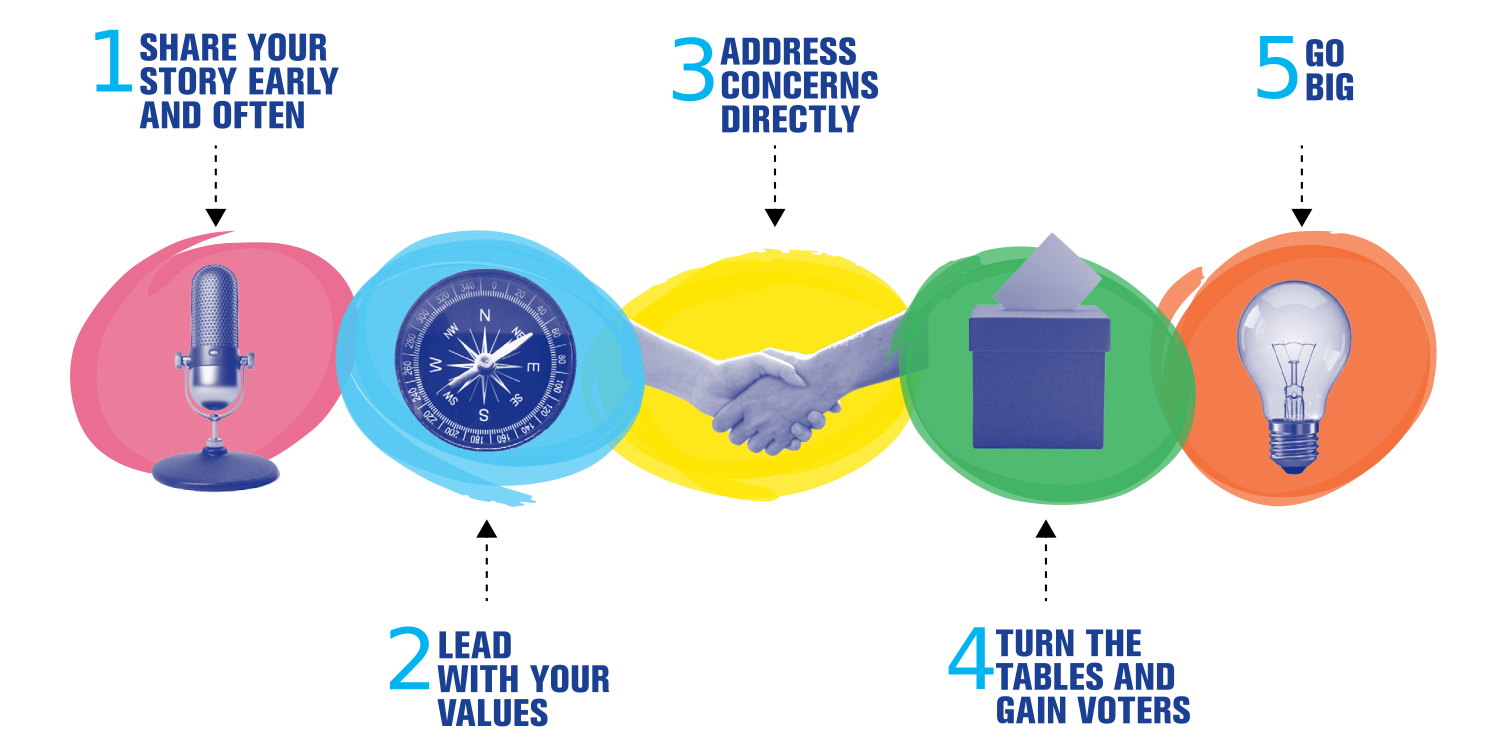
But a playbook is useless if you don’t have candidates who are willing to take a risk. We need allies willing to speak out. We have no use for politicians who believe in equality in private but go mute when the cameras turn on. If you're not willing to stand in your values when it's hard, you were never really standing in them at all.
Here's what the data shows — and what recent election cycles have proven: Equality is a winning issue. Not a liability. Not a trap. A winning issue. Candidates who stood strong on LGBTQ+ rights didn't just survive — they won by double digits. They were attacked relentlessly, and they did not flinch. They leaned in, responded with strength and earned the trust of voters who were hungry for leaders with conviction.
This playbook is for candidates who are ready to stop playing defense and start leading with conviction. It draws from real campaigns, real data and real wins to show how pro-equality leaders can go on offense, neutralize extremist attacks and build durable support — not just for LGBTQ+ people, but for the kind of country where everyone belongs and everyone can thrive.
One year out from the midterm elections, the path forward for political candidates is clear: Run your race on your values. Don't let the political attacks define you — define yourself. And when they come for you, don't back down. Show voters who you are and what you're made of.
Silence isn’t a winning strategy. This moment calls for candidates willing to proudly stand by their values and refuse to back down on equality. That’s how we win.

 View the full issue