
One Year In: What HRC’s New Data Tells Us About Our Lives Today
Winter 2026 • Jonathan Lovitz He/Him
For nearly 50 years, the Human Rights Campaign has tracked the arc of LGBTQ+ life in America. We have measured progress when others ignored us, or attempted to erase us as they are doing today. When the government walked away from its responsibility to study and count LGBTQ+ Americans, we did what HRC has always done: We stepped in and stepped up.
The “One Year In: LGBTQ+ Americans Under the Trump Administration” report is the most comprehensive snapshot of LGBTQ+ life in this moment. Built on responses from nearly 15,000 adults, including almost 10,000 LGBTQ+ people, it captures not ideology or rhetoric, but lived experience.
As HRC President Kelley Robinson said, “Because if they won't tell the truth about us, we will tell it ourselves.”
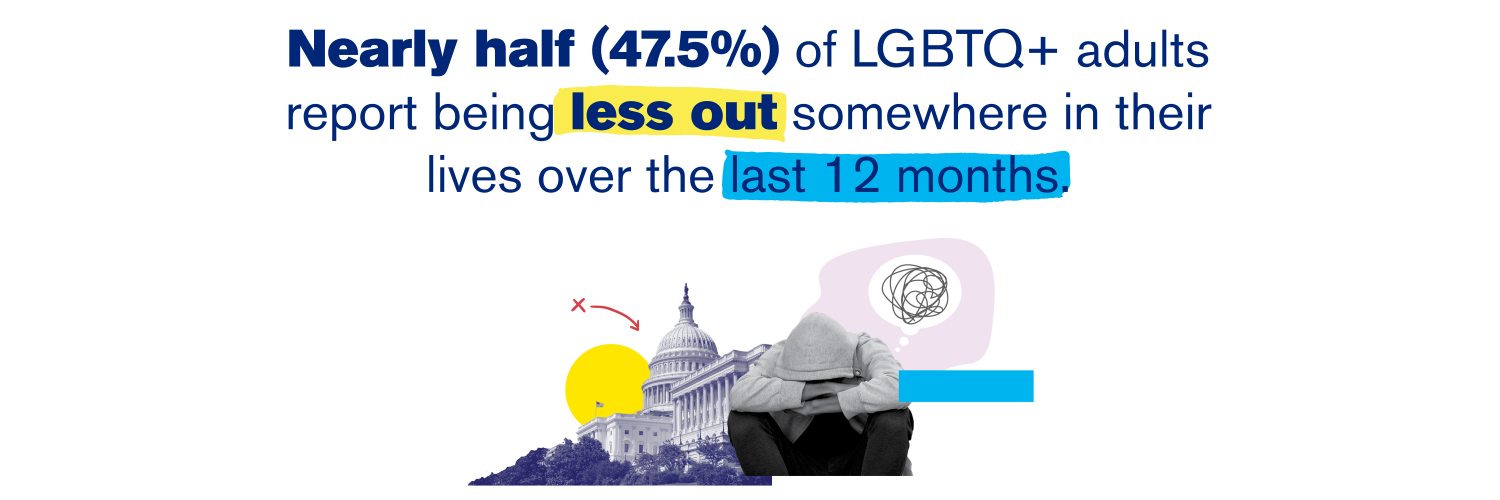
Across the country, LGBTQ+ people are retreating from public life. More than half report being less visible than they were a year ago. Nearly half say they are less out in at least one part of their lives. That pullback cuts across workplaces, healthcare settings, schools and public spaces. Parents describe becoming quieter at school events. Workers talk about editing themselves in meetings. People who once felt safe being known now calculate whether being seen is worth the risk.
The report also documents a sharp decline in health and well-being. LGBTQ+ adults who experience discrimination in healthcare are twice as likely to report being in fair or poor health. Nearly onethird say their health worsened over the past year. For transgender and non-binary people, the situation is even more severe. Two-thirds report difficulty accessing care, with many delaying treatment or avoiding medical systems altogether. These are not failures of medicine. They are the predictable outcomes of policies that narrow access, slash funding and intimidate providers.
HIV prevention and treatment is a particularly stark example. After decades of progress, barriers to care are rising again. LGBTQ+ adults on Medicare or Medicaid are more than twice as likely to report difficulty accessing HIV services. Among lower-income LGBTQ+ adults, more than four in 10 report the same struggle. When prevention stalls and treatment lapses, the consequences are measured in lives, not headlines.
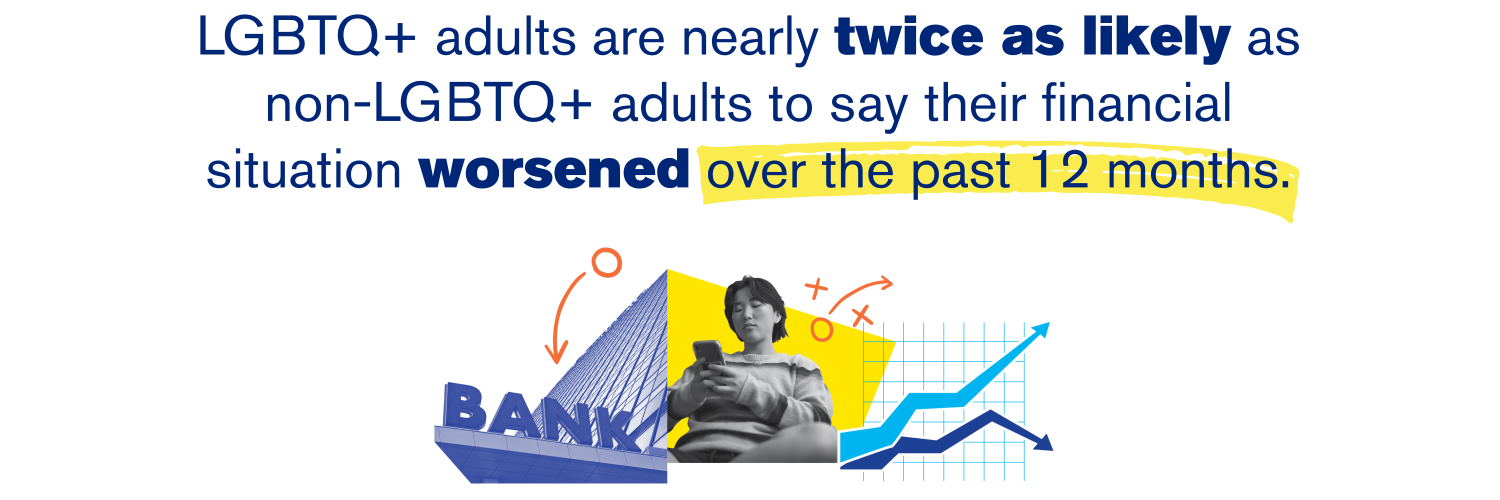
Economic security is also unraveling. LGBTQ+ adults are nearly twice as likely as non-LGBTQ+ adults to say their financial situation has worsened over the last year. Discrimination compounds that instability. Those who experience bias are far more likely to report financial insecurity, job loss or difficulty finding work. Cuts to nutrition assistance and Medicaid have pushed many families closer to crisis, forcing choices no one should have to make between food, housing and healthcare.
And yet, perhaps most importantly: The data does not tell a story of collapse. It tells a story of strain layered on top of resilience.
Even as people pull back in unsafe spaces, they continue to show up for one another. Community networks are filling gaps left by government retreat. Parents are organizing. Faith leaders are opening doors wider. Young people are demanding honesty, not silence. Across the American Dreams Tour, the stories HRC heard and captured echoed the survey findings but also expanded them. Fear is real. So is our community’s resolve. That resolve has carried us through the darkest of days, including today.
“At the height of the AIDS epidemic, the government abandoned us and left us to die. We buried our friends. We cared for our sick. And we fought until we forced this country to respond,” said Robinson in the report.
Today, HIV is no longer a death sentence — because we refused to accept one. We were told for decades that marriage equality was a fantasy, that America would never embrace our families. We organized anyway, changed hearts anyway and won recognition at the highest court in the land. When we could be fired for being who we are, we pushed corporate America to lead — and today, more than 90 percent of Fortune 500 companies protect LGBTQ+ workers.

One year in, the data is clear. Life is harder for LGBTQ+ Americans right now. But it also underscores why this movement exists. Not because equality is guaranteed, but because it must be defended, measured and demanded, again and again.
That is what this report does. It tells the truth about our lives. And it reminds us why telling that truth still matters.
Explore the “One Year In” report and see how HRC is putting data into action.

Share
Join HRC
Become a Member View the full issue
Also in the Winter 2026 Issue:
- HRC Honors America’s Trans Military Heroes with Historic Retirement Ceremony
- One Year Out: HRC’s Groundbreaking Playbook to Help Candidates Win in 2026 and Beyond
- The Human Rights Campaign Foundation Stands Up for Federal Workers During Trump’s Attack on Trans Healthcare
- Turning Research into Transformational Change