
Power of the Purse Report
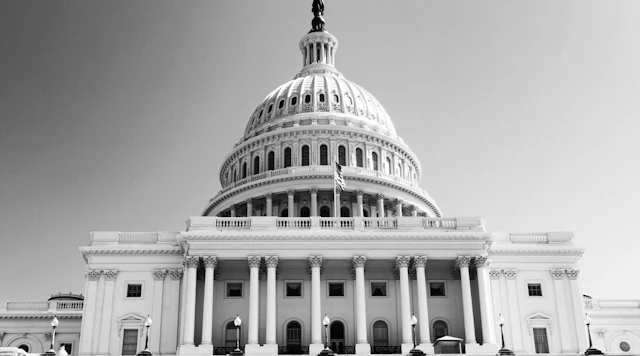
Under the Constitution, Congress holds the power of the purse — determining how federal dollars flow and shaping which programs, communities, and priorities move forward.
What used to be a technical exercise in funding our government has become a vehicle for culture war attacks, loaded with riders designed to block gender-affirming care, strip nondiscrimination protections, dismantle DEI, and even cut off critical community funding.
Make no mistake — the appropriations fight is not just about numbers. The FY2025 bills once again recycle and intensify anti-LBGTQ+ riders designed to restrict health care, silence our community voices, and make LGBTQ+ lives politically invisible. Yes, these are the same attacks we fought in FY2024 — but this year, they’re more organized, more targeted, and part of a longer-term strategy. In total, we count 52 anti-LGBTQ+ riders across the appropriations bills.
The Appropriations Process and the Escalating Dangers for LGBTQ+ People in Congress This Year
In practice, the annual appropriations process has become one of the most powerful levers Congress uses to influence public policy — and this year, it has also become one of the most dangerous arenas for LGBTQ+ people.
The Landscape: A Congress Increasingly Hostile to LGBTQ+ People
Across both chambers, we’ve seen an alarming escalation in rhetoric targeting LGBTQ+ people. Some lawmakers have made demonizing queer and trans people a core political strategy — fueling misinformation, stoking fear, and using LGBTQ+ people as a wedge to advance their own political agendas.
This rhetoric has translated directly into legislative action: bills that police gender identity, restrict sexual orientation from curricula and data, weaponize “parental rights,” and strip away nondiscrimination protections.
That animus now thoroughly permeates the appropriations process.
Appropriations as a Conduit for Anti-LBGTQ+ Attacks
Every year, 12 appropriations bills fund the federal government — from health care and education to defense and housing. Traditionally, these bills focus on funding levels and program priorities. But now, for the third year in a row, the House of Representatives has loaded up their appropriations bills with extreme ideological amendments known as riders, including 52 anti-LGBTQ+ riders.
If enacted, these riders would become a significant vehicle for undermining LGBTQ+ equality
The Threat: Anti-LGBTQ+ Riders at Unprecedented Scale
In this year’s process, congressional Republicans have embedded a wave of sweeping anti-LGBTQ+ riders across multiple spending bills.
These harmful provisions seek to:
- Block access to gender-affirming care
- Erase sexual orientation and gender identity from federal data collection
- Prohibit or impede enforcement of nondiscrimination protections
- Restrict the ability of agencies to support LGBTQ+ youth, families, and service members
- Target global LGBTQ+ rights, HIV programs, and critical public health efforts
- Interfere with medical decision-making by inserting politicians between patients, parents, and providers
- Limit LGBTQ+ participation in public life — from sports to education to civic service
These riders turn what should be a routine process into a high-stakes effort to legislate LGBTQ+ people out of public life.
A New Layer of Risk: Rescissions and Administrative Rollbacks
This year’s danger is not limited to appropriations riders alone.
Congressional Republicans have also used the rescissions process (A progress Congress officially takes back money it had already approved for government spending because it decides that money is no longer needed) to claw back funding for programs the Biden administration had restored or strengthened — programs that have been lifelines for LGBTQ+ people, particularly transgender youth, low-income households, and people living with or vulnerable to HIV.
Appropriations Attacks – FY2026
Across the 12 spending bills, we are not just seeing partisan language — we’re seeing a deliberate strategy to regulate our bodies, erase our identities, and strip away civil rights protections under the guise of federal budgeting.
- Attacks on gender affirming care
- License to discriminate
- Drag bans
- Bans on Pride flags
- Blocking civil rights enforcements
Rolling Back Equity Infrastructure
Nearly every FY2026 bill takes aim at diversity, equity, and inclusion (DEI) efforts — because opponents know these structures are where marginalized communities begin to gain power
The bills would:
- Defund offices responsible for enforcing civil rights
- Prohibit work to address barriers facing LGBTQ+ people, people of color, disabled individuals, religious minorities, and rural communities
- Eliminate key federal leadership posts, including the Special Envoy for the Human Rights of LGBTQI+ Persons, whose entire mission is to confront global violence and persecution.
This is more than a policy disagreement — it is an effort to dismantle the infrastructure that protects fairness and justice.
The Threat of Rescission Packages for the LGBTQ+ Community
The Trump Administration has weaponized the rescissions process, a legislative clawback of funds that Congress has already approved. Prior recissions were bipartisan efforts to adjust previously appropriated funds based on new priorities.
However, the Trump Administration has taken a cudgel to longstanding, bipartisan programs, labelling them as “woke” or “wasteful,” and has attempted to use the appropriations process to greenlight their destruction of programs that serve marginalized communities, including LGBTQ+ people.
The assault on global LGBTQI+ programming began just hours after President Trump took office on January 20 when he signed Executive Order 14169, titled “Reevaluating and Realigning United States Foreign Aid.” This action began one of the most unrelenting and aggressive attacks on U.S. foreign assistance programs and wreaked havoc on LGBTQI+ communities around the globe.
Human rights, democracy, and development programming for LGBTQI+ persons through the State Department’s Global Equality Fund and USAID’s Inclusive Development Hub alongside HIV treatment and prevention programming for key populations in PEPFAR were prime targets.
The results of these assaults on the human rights of LGBTQI+ persons in foreign assistance have been devastating. Today, no programs are designed to specifically target or reach LGBTQI+ persons, leaving huge gaps in protection around the world.
Given past behavior, we expect the next rounds to potentially include:
- Direct attacks on civil rights enforcement — Office of Civil Rights, Equal Employment Opportunity Commission, Health and Human Services
- Cuts to HIV prevention and care, especially programs the community previously had to mobilize to protect (PrEP, Ryan White, testing, housing)
- Threats to data collection (SOGI data across HHS, Education, HUD, DOJ)
- Funding for LGBTQ+ community centers, youth homelessness, and mental health
These are not confirmed cuts — but they are pattern-based threats that the administration has signaled openness to, and which could easily appear in cherry-picked, ideologically driven rescissions.
General Legislative Attacks (Past Year)
This year has included several anti-LGBTQ bills that reflect the same themes and lines of attack we’ve seen in the appropriations process. These standalone bills as an additional category of threats — separate from those embedded in appropriations.
| Bill Title | Bill # | Sponsor | Purpose / Impact |
|---|---|---|---|
| Protect Children's Innocence Act (Reintroduced) | H.R. 480 | Rep. Marjorie Taylor Greene (R-GA) | Criminalizes gender-affirming care for minors; felony charges for providers and possible penalties for parents |
| Fairness in Women’s Sports Act | H.R. 683 | Rep. Greg Steube (R-FL) | Redefines Title IX to exclude transgender girls from school sports nationwide |
| Old Glory Only Act | H.R. 98 | Rep. Jeff Duncan (R-SC) | Bans Pride flags at embassies, military bases, and all federal buildings |
| Stop the Sexualization of Children Act (Federal Don’t Say Gay) | H.R. 195 | Rep. Mike Johnson (R-LA) | Bans LGBTQ-inclusive educational materials, Pride events, and health programming in federally funded settings |
| Women’s Bill of Rights | S. 325 | Sen. Cindy Hyde-Smith (R-MS) | Defines “sex” in federal law only as biology at birth, undermining Bostock, Section 1557, and Title IX protections |
| End Taxpayer Funding of Gender Experimentation Act | H.R. 436 | Rep. Ralph Norman (R-SC) | Blocks Medicaid, Medicare, DoD, VA, and HHS funding for gender-affirming care for minors and adults |
| Defund the LGBTQI+ Special Envoy Act | H.R. 219 | Rep. Scott Perry (R-PA) | Eliminates the State Department’s LGBTQI human rights role, halting global anti-violence diplomacy |
| Stop the DOJ from Suing States Act | H.R. 798 | Rep. Jim Banks (R-IN) | Blocks federal enforcement of civil rights violations against anti-trans state laws |
| No Pride in Taxpayer-Funded Institutions Act | H.R. 923 | Rep. Jeff Duncan (R-SC) | Explicitly bans Pride flags on federal property and embassy grounds |
| Protect Minors from Medical Malpractice Act | S. 112 | Sen. Bill Cassidy (R-LA) | Opens litigation against providers who offer gender-affirming care — even when medically recommended |
We are already seeing this blueprint migrate into appropriations attacks:
- Attempts to block Medicaid and Medicare reimbursement for gender-affirming care are now paired with efforts to restrict PrEP, HIV testing, and sexual health services, especially for transgender and LGBTQ+ people.
- Efforts to redefine “sex” as strictly biological in standalone bills are now showing up in riders that would gut Section 1557 protections, affecting access to HIV prevention, Ryan White services, Title X reproductive health, and even HOPWA housing protections.
- Bills that criminalize or stigmatize LGBTQ identity are now informing restrictions on community health education, HIV prevention campaigns, school-based health centers, and public health research funding at CDC and NIH.
These funding fights are running in parallel with policy attacks.
This strategy is clear, coordinated, and accelerating. Our response must be strategic, disciplined, and unapologetically rooted in health equity and dignity.
- Topics:
- Research


Love Conquers Hate

Fall Favorites
Shop for HRC clothing and gifts. 100% of every purchase fuels the fight for equality.