Supreme Court Allows States to Exclude Transgender Athletes From School Sports at the Expense of All Women and Girls, Leaving the Future of Anti-Discrimination Protections At Risk
by Aneesha Pappy •
HRC President Kelley Robinson: “No kid – not my kid, not your kid, not any kid – deserves to be discriminated against.”
This ruling allows discriminatory, anti-transgender sports bans in West Virginia and Idaho to stand, impacting bans in other states
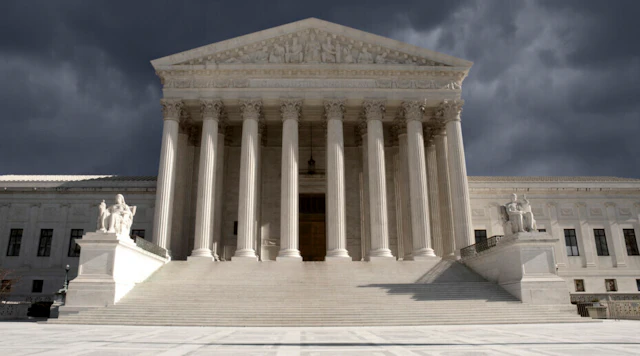
WASHINGTON, DC— Today, the U.S. Supreme Court issued a deeply disappointing ruling in West Virginia v. BPJ and Little v. Hecox, upholding discriminatory, anti-transgender sports bans in West Virginia and Idaho, allowing these states to leave transgender student athletes behind simply for who they are. The court found that these bans are not in violation of the Equal Protection Clause or Title IX, but does not serve to create a nationwide blanket ban on transgender athletes. The court primarily addressed the lawfulness of anti-transgender discrimination within the context of sports. Disappointingly, the court held that unlike other federal nondiscrimination statutes, Title IX is limited to “biological sex” discrimination. However, the court declined to determine which level of scrutiny claims of anti-transgender discrimination should receive, leaving other current rights and protections for transgender people outside of sports vulnerable.
Still, this ruling falls in line with other rulings from conservative justices on the Supreme Court that have rolled back rights and freedoms for many marginalized communities, including LGBTQ+ people, asylum seekers, immigrants, and BIPOC voters disproportionately impacted by the gutting of voting rights protections.
In response, HRC President Kelley Robinson released the following statement:
“No kid – not my kid, not your kid, not any kid – deserves to be discriminated against. Yet this ruling is heartbreaking for transgender student athletes who are being forced to sit on the sidelines simply for who they are. When politicians convince the public that any girl could be ‘the wrong kind of girl,’ they invite harassment, intimidation, invasive questioning, or even an inspection of their body by a total stranger. It’s sadly just the latest decision by the conservative justices on the Supreme Court to roll back protections for marginalized communities and create a second class citizenship for millions of people. We are sacrificing the dignity, privacy, and safety of America’s young people to solve a problem that was manufactured and exploited for political gain.”
“While we know this administration and other anti-equality politicians won’t stop obsessing over trans kids, we must all call on states to adopt inclusive policies so that no one gets left behind for being their authentic selves. We must show up in large numbers for every school board, local, and state and federal election to be sure our communities are heard. We must continue this fight with full force until freedom, justice and equal opportunity are not flimsy promises, but nationwide guarantees.”
Justice Jackson wrote in her dissent:
“A transgender woman penalized for being perceived as aggressive has experienced discrimination ‘on the basis of sex’ just as much as a cisgender woman has, no matter that the transgender woman’s behavior matches expectations of her sex assigned at birth. Either way, the institution has imposed its gender-based expectations upon her. And either way, the institution may have violated Title IX.”
Details of the Cases:
West Virginia v. BPJ is brought by the ACLU, the ACLU of West Virginia, Lambda Legal and Cooley LLP, who are representing a West Virginia family and their daughter Becky, a middle school student who was not allowed to try out for girl’s sports because she is transgender. Becky asserts that the ban violates her rights under Title IX and the Equal Protection Clause of the U.S. Constitution. The U.S. Department of Justice under the previous administration supported her case, and Becky won the protection of a preliminary injunction. The Fourth Circuit Court of Appeals upheld the injunction as well.
Little v. Hecox is brought by the ACLU and the ACLU of Idaho, Legal Voice, and Cooley LLP on behalf of Lindsay Hecox, a transgender student at Boise State University who was impacted by Idaho’s 2020 transgender athletics ban. Hecox asserts that the ban violates her rights under the Equal Protection Clause of the U.S. Constitution. A federal judge issued an injunction blocking enforcement of Idaho’s anti-transgender sports ban, which was later upheld by the Ninth Circuit Court of Appeals.
Last year, the Supreme Court decided to take up the cases together and heard oral arguments on January 13th, 2026.
The Human Rights Campaign (HRC) is the nation’s largest LGBTQ+ civil rights organization working to achieve equality for lesbian, gay, bisexual, transgender and queer (LGBTQ+) people, with 3.6 million members and supporters. The HRC Foundation (a 501(c)(3)) works to ensure LGBTQ+ people are safe, seen and supported where it matters most: at school, at work and in every community across the country. From the courtroom to the classroom, from Congress to corporate America, HRC and the HRC Foundation build power through partnerships, storytelling, and action—working to create a future rooted in equity, freedom and belonging for all LGBTQ+ people.
Contact Us
To make a general inquiry, please visit our contact page. Members of the media can reach our press office at: (202) 572-8968 or email press@hrc.org.
Love Conquers Hate

Fall Favorites
Shop for HRC clothing and gifts. 100% of every purchase fuels the fight for equality.