BACKGROUNDER: Supreme Court to Hear Oral Arguments for West Virginia v. BPJ and Little v. Hecox, Key Cases on the Inclusion of Transgender Youth in Sports
by Aneesha Pappy •
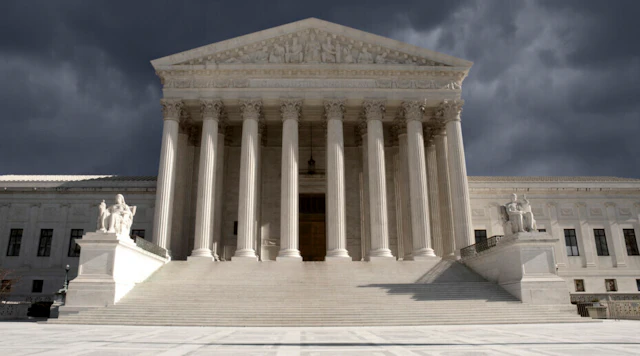
Oral arguments for West Virginia v. BPJ and Little v. Hecox will be heard on January 13th; the Court will consider whether laws from West Virginia and Idaho that ban transgender students from playing on school sports teams that align with their gender identity violate the United States Constitution or Title IX’s nondiscrimination provisions, with potentially broader impacts for LGBTQ+ people across a range of areas
2x World Cup Champion and HRC Board Member Ashlyn Harris: "I can say unequivocally that the types of bans in front of the Supreme Court do nothing to solve the actual problems facing women’s sports that I spent my career fighting.”
On January 13th, 2026, the U.S. Supreme Court will hear oral arguments for West Virginia v. BPJ and Little v. Hecox, cases arguing that West Virginia and Idaho’s bans preventing transgender students from playing on the school sports teams that align with their gender identity violate both Title IX and the United States Constitution’s Equal Protection clause. As transgender youth continue to face numerous targeted attacks from healthcare to education, these cases mark another key moment in the fight against anti-LGBTQ+ discrimination that could have implications beyond the sports world.
Human Rights Campaign Senior Director of Legal Policy Cathryn Oakley released the following statement ahead of oral arguments:
“The issues at play in these cases are basic fairness and equality. Every child, no matter their background, race, or gender, should have access to a quality education where they can feel safe to learn and grow–and for many kids that involves being a part of a school sports team. To deny transgender kids the chance to participate in school sports alongside their peers simply because of who they are is textbook discrimination—and it’s unconstitutional.
“The legal support for the challenges to these clearly discriminatory laws is clear. Yet in these cases, we once again have the Alliance Defending Freedom, the Project 2025-affiliated group that brought the case that overturned Roe v Wade as well as many anti-LGBTQ+ lawsuits, fighting to dismantle well-established civil rights protections. These bans aren’t just about attacking trans kids–they’re about policing gender. The Court should follow the law, reject this callous bullying, and ensure every child in school can feel safe and supported in their educational journeys."
2x World Cup Champion and HRC Board Member Ashlyn Harris released the following statement ahead of oral arguments:
“It’s not an exaggeration to say that sports saved my life. Not only did it teach me about leadership, accountability, and teamwork, it gave me a sense of belonging and safety that I needed to survive. Every kid deserves this opportunity, and it breaks my heart to see efforts to take sports away from trans kids who just want a place to play and belong. As a 2x World Cup Champion, I can say unequivocally that the types of bans in front of the Supreme Court do nothing to solve the actual problems facing women’s sports that I spent my career fighting for–including equitable pay, safety, and a lack of resources and respect. Instead, they hurt all women and girls by encouraging folks to police what we look like and how we show up in the world. Let’s stop with the bullying and let all kids play.”
Details of the Cases:
West Virginia v. BPJ is brought by the ACLU, the ACLU of West Virginia, Lambda Legal and Cooley LLP, who are representing a West Virginia family and their daughter Becky (B.P.J), a middle school student who was not allowed to try out for girl’s sports because she is transgender. B.P.J asserts that the ban violates her rights under Title IX and the Equal Protection Clause of the U.S. Constitution. The U.S. Department of Justice under the previous administration supported her case, and B.P.J. won the protection of a preliminary injunction. The Fourth Circuit Court of Appeals upheld the injunction as well.
Little v. Hecox is brought by the ACLU and the ACLU of Idaho, Legal Voice, and Cooley LLP on behalf of Lindsay Hecox, a transgender student at Boise State University who was impacted by Idaho’s 2020 transgender athletics ban. Hecox asserts that the ban violates her rights under the Equal Protection Clause of the U.S. Constitution. A federal judge issued an injunction blocking enforcement of Idaho’s anti-transgender sports ban, which was later upheld by the Ninth Circuit Court of Appeals.
Last year, the Supreme Court decided to take up the cases together, hearing oral arguments on January 13th, 2026. A decision is expected in Spring of this year.
Potential Impact of these Cases:
The state bans in these cases are being challenged on two grounds: Title IX and the Equal Protection Clause of the U.S. Constitution.
The Supreme Court will have to weigh whether Title IX’s prohibition of discrimination on the basis of sex in federally funded educational programs includes a prohibition of discrimination on the basis of gender identity, specifically in the context of sports.
- If the Court rules that Title IX does not include prohibitions for discrimination on the basis of gender identity, specifically for sports or more broadly, it would allow these anti-transgender sports bans to stand.
- Additionally, Title IX governs different types of sex-based discrimination beyond sports, including the use of people’s names and pronouns, what bathrooms a person can use, what dress codes they have to adhere to, whom they can take to prom, and even whether they can openly identify as LGBTQ+.
- Therefore, undermining Title IX protections for transgender people could create pathways for increased discrimination and exclusion in federally-funded educational institutions for all LGBTQ+ people.
- If the Court rules that Title IX does include prohibitions for discrimination on the basis of gender identity in sports, the Plaintiffs (Hecox and B.P.J.) would win their challenges and the state bans, and others like them across the country, would fall.
- On Equal Protection grounds, the Court will again be asked to determine what level of constitutional scrutiny anti-transgender laws must survive if they are to stay in effect. Depending on the rationale the Court uses to justify the level of scrutiny they choose, that level of scrutiny could have implications for anti-transgender laws other than sports.
The Human Rights Campaign (HRC) is the nation’s largest LGBTQ+ civil rights organization working to achieve equality for lesbian, gay, bisexual, transgender and queer (LGBTQ+) people, with 3.6 million members and supporters. The HRC Foundation (a 501(c)(3)) works to ensure LGBTQ+ people are safe, seen and supported where it matters most: at school, at work and in every community across the country. From the courtroom to the classroom, from Congress to corporate America, HRC and the HRC Foundation build power through partnerships, storytelling, and action—working to create a future rooted in equity, freedom and belonging for all LGBTQ+ people.
Contact Us
To make a general inquiry, please visit our contact page. Members of the media can reach our press office at: (202) 572-8968 or email press@hrc.org.
- Topics:
- SCOTUS
Love Conquers Hate

Fall Favorites
Shop for HRC clothing and gifts. 100% of every purchase fuels the fight for equality.